
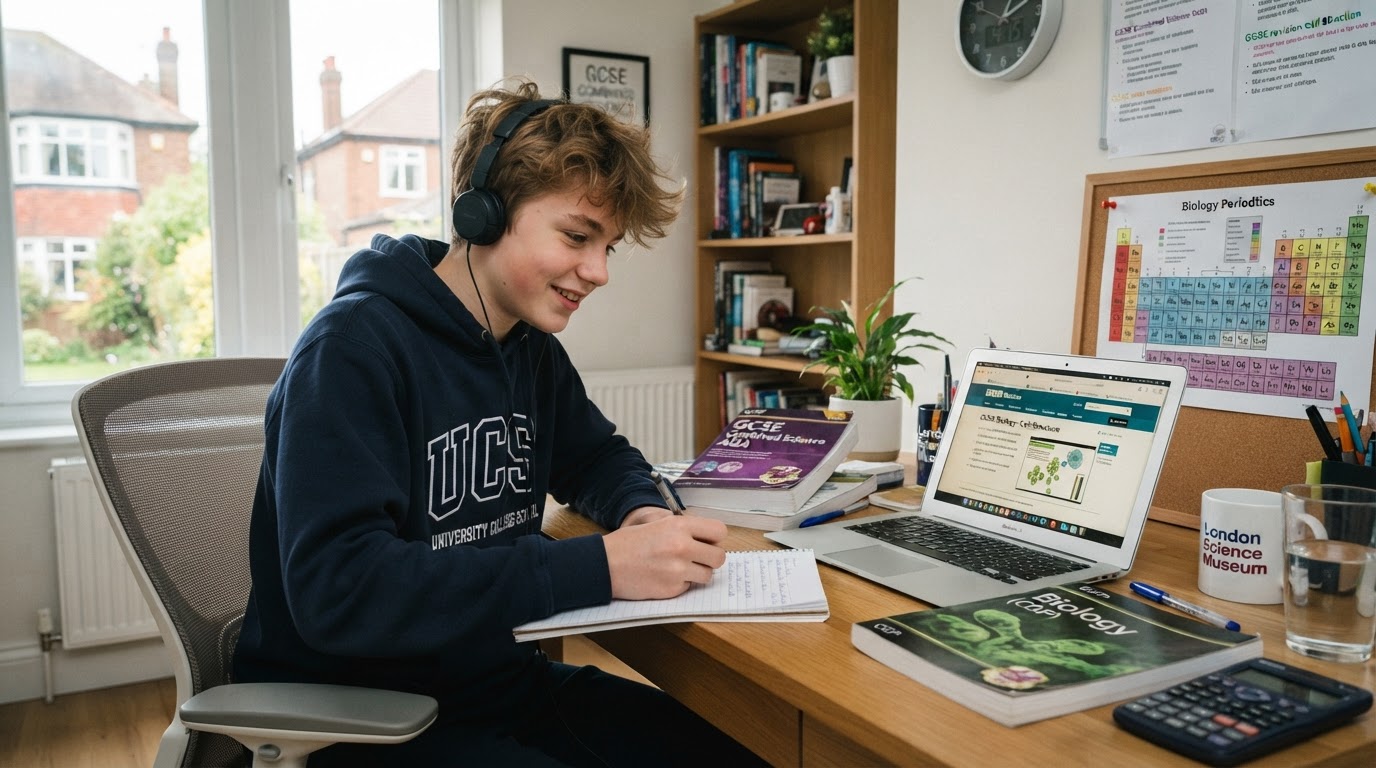
KS3 Science: Building the Foundations That Make GCSEs Effortless
Browse all categories
Why the jump from Year 9 to GCSE catches so many students out, and the three core habits that make the transition seamless — written for parents and students who want to feel ready, not rushed.
Why KS3 Matters More Than Most People Think
Key Stage 3 is often treated as a warm-up — the years before the exams that really count. But in my experience tutoring dozens of students from Year 7 through to their GCSEs, KS3 is where confidence is either built or quietly eroded. The habits, the language of science, and the way a student feels about their own ability are all formed here. Get this stage right and GCSEs feel like a natural next step rather than a sudden wall.
The truth is that the jump from Year 9 to GCSE is bigger than most schools admit. The pace quickens, the vocabulary becomes more precise, and students are suddenly expected to apply knowledge rather than simply recall it. A student who has spent KS3 memorising glossaries will find GCSE questions disorientating. A student who has spent KS3 learning how to think scientifically will find them genuinely enjoyable. The difference is not ability — it is preparation.
This article is a calm, practical guide to building that preparation. Whether your child is in Year 7 finding their feet or Year 9 starting to feel the pressure, there is time, and there is a clear path forward.
The Three Habits That Change Everything
Over years of tutoring I have identified three habits that consistently separate students who glide into GCSEs from those who stumble. None of them require natural brilliance. All of them can be built gently, with encouragement, over the course of a single term.
The first habit is active recall. Instead of re-reading notes or highlighting textbooks, students should close the book and try to write down everything they remember about a topic. This feels harder than reading — and that is precisely the point. The effort of retrieval is what strengthens the memory. A Year 8 student who spends ten minutes after a lesson trying to recall the key points will remember far more, a week later, than a student who spent thirty minutes passively re-reading the same page.
The second habit is using the correct scientific language early. Many KS3 students describe processes in their own words — and that is fine to begin with. But exam marks are awarded for precise terminology. A student who learns to say "photosynthesis" rather than "the way plants make food" from Year 7 is building a foundation that pays off in every science GCSE. We gently introduce this language throughout KS3 so that by GCSE it is second nature.
The third habit is regular, low-stakes checking of understanding. This does not mean weekly tests that cause anxiety. It means short, friendly check-ins — a few questions at the start of each session, a quick recap of last week's topic — that reveal gaps before they grow. When a student gets something wrong in a low-stakes moment, it is a learning opportunity, not a failure. This builds resilience and a healthy relationship with mistakes.
How We Support KS3 Students
In our 1-to-1 online sessions, KS3 tutoring is never about rushing ahead. It is about making sure each concept is genuinely understood before moving on. We work at the student's pace, revisit tricky topics as many times as needed, and always tie new ideas back to what the student already knows. This is how confidence grows — not from being told you are clever, but from the quiet, repeated experience of understanding something that once felt impossible.
Every lesson is video recorded and shared with the student. This is especially valuable at KS3, when students are still learning how to revise independently. They can watch a tricky explanation again the night before a school test, or revisit a method they learned weeks ago. Parents tell us this feature gives them genuine peace of mind — they can see exactly how lessons are run and how their child is progressing.
We also set short homework tasks between lessons and mark them with written feedback. This is not about piling on pressure. It is about giving the student a gentle structure and giving us clear information about where to focus next. Homework is always pitched at the right level — challenging enough to make progress, never so hard that it knocks confidence.
A Word to Parents
If your child is in KS3 and you are wondering whether tutoring is worth it yet, here is my honest view. You do not need to wait for grades to slip. The most successful GCSE students I have worked with are the ones who started building habits in Year 8 or 9 — not because they were struggling, but because they wanted to feel ready. A single hour a week at this stage can be transformative.
That said, KS3 tutoring should never feel like a pressure cooker. The goal is to build a calm, capable learner who enjoys science and trusts their own understanding. If your child currently dreads science, our first job is to change that feeling. Once a student believes they can do it, the rest follows much more easily.
We offer a free 60-minute trial session for every new student. It is a no-pressure way to see whether our approach feels right for your child. There is no obligation, and many parents tell us the trial alone gave their child a visible confidence boost.
Building Confidence, Not Anxiety
The most important thing we nurture in KS3 students is not knowledge — it is the belief that they are capable. Science can feel intimidating, especially when classmates seem to grasp things faster. But ability is not fixed. Every student I have taught has made meaningful progress when given the right support, the right pace, and the right encouragement.
If your child is willing to try, we will meet them exactly where they are. We will build the foundations, the habits, and the confidence together — one calm, recorded, well-prepared lesson at a time. By the time GCSEs arrive, they will not just be ready. They will be quietly confident. And that is the best possible place to start.
Want this kind of support for your child?
Book a free 60-minute trial session. We will diagnose where your child is now and show them exactly how to improve.
Book a Free Trial SessionBrowse all categories